


There are bad ideas, there are shortsighted ideas, and then there is the suggestion that Louisiana, Louisiana Tech and ULM should consider dropping their football programs from FBS to FCS because college athletics has become too expensive.
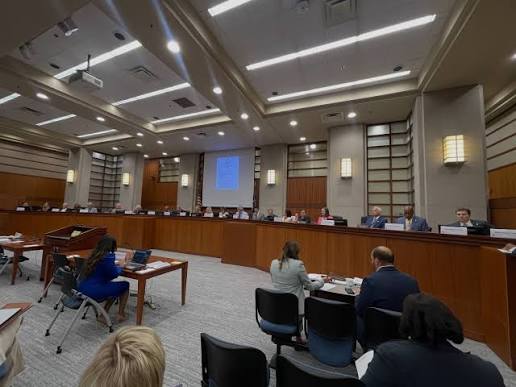
That idea is apparently serious enough to be discussed in the orbit of the Louisiana Board of Regents as noted in a recent article by Greg Hilburn from the News Star.
And that alone should raise some questions.
Nobody needs to be told that college athletics is expensive. The House settlement, direct revenue sharing with athletes, NIL, escalating coaching salaries, facilities and the widening financial gap between the Power Four and everyone else have created legitimate challenges for universities across America.
But if financial losses are going to become the justification for deciding which Louisiana universities supposedly belong at the highest level of college football, somebody might want to look about 60 miles east of Lafayette before drawing up the relegation papers.
Because LSU athletics reportedly lost $44 million during the 2025-26 fiscal year.
Not Louisiana. Not Louisiana Tech. Not ULM.
LSU.
And LSU President Wade Rousse told the Louisiana Board of Regents just last week that the Tigers are projecting another $26 million athletic deficit for the current fiscal year. LSU has also exceeded its finalized athletic budgets by a combined $177.5 million over the previous six years, according to Rousse.
That's not some anti-LSU talking point. That's LSU's president discussing LSU's finances in front of the same Board of Regents.
So what exactly is the standard here?
Because if the argument is simply that spending more than you generate means your athletic ambitions need to be dramatically reduced, things get uncomfortable pretty quickly when the biggest athletic department in Louisiana is currently producing the biggest red number.
Of course, there are enormous differences between LSU and the state's Group of Six programs. LSU generates far more money, has SEC television revenue, a massive donor base and significantly greater capacity to absorb losses. Nobody reasonable would suggest otherwise.
But that's precisely why simply looking at an athletic department's bottom line and saying, "Maybe you should drop down," is such a shallow way to examine the issue.
Athletics isn't a lemonade stand.
Universities don't sponsor football solely because somebody expects the football operation to spit out a year-end dividend. Athletics is tied to marketing, alumni engagement, fundraising, enrollment, student experience, media exposure and the overall visibility of the institution.
And FCS isn't some magical coupon code that makes all those expenses disappear.
When Idaho became the rare university to voluntarily move from FBS to FCS, its athletic administration acknowledged that the school would lose significant FBS revenue. Officials estimated the university would surrender roughly $800,000 to $1 million annually in College Football Playoff distributions alone, in addition to other television, conference and game-guarantee revenue. Idaho did save money through fewer football scholarships and reduced expenses, but officials openly acknowledged that there were financial tradeoffs rather than some guaranteed financial windfall.
That's the conversation Louisiana's leaders should actually be having.
What money would Louisiana, Tech and ULM save?
What conference distributions would disappear?
What happens to television exposure?
What happens to game guarantees?
What happens to sponsorship value?
What happens to ticket sales?
What happens to fundraising?
What happens to the value of the Sun Belt's increasingly regional structure, which now gives Louisiana, Tech and ULM regular competition against nearby institutions rather than sending teams all over the country?
Those numbers matter considerably more than tossing "FCS" into a conversation as though moving down a classification automatically fixes an athletic budget.
There's another layer to this discussion that deserves transparency as well.
Blake David currently chairs the Board of Regents' Finance Committee, the group naturally positioned in the middle of these financial discussions. David is a Lafayette attorney and community leader with deep ties to Acadiana. He's also an LSU graduate twice over: a 1997 LSU undergraduate and a 2001 graduate of the LSU Paul M. Hebert Law Center, where he continues to teach trial advocacy.
That background doesn't invalidate anything David says, nor does it establish some hidden LSU agenda. It is simply relevant context in a state where relationships between LSU and the other public universities have never exactly been free of politics, money or institutional turf wars.
And the Regent board member who is making the biggest case for the three to drop down? Shreveport attorney Wilbert Pryor, an LSU law school graduate. Pryor is also such a college sports expert that he didn't even realize Division 1AA ceased to exist over 20 years ago. And he, somehow, is leading the conversation on college athletics.
Which is why the standard applied here needs to be clear and consistent.
If the state wants to have a serious discussion about the future financing of college athletics, have it.
Put everyone's numbers on the table.
Louisiana's. Louisiana Tech's. ULM's. Southern's. McNeese's.
And, yes, LSU's.
Talk about institutional support. Talk about athletic revenue. Talk about conference distributions. Talk about student fees. Talk about donor support. Talk about the economic impact these programs create in Lafayette, Ruston and Monroe. Talk about what would actually be saved by dropping classifications and what revenue would disappear along with it.
But the conversation becomes awfully strange when three universities are floated as candidates for athletic downsizing at almost the exact moment LSU is telling the same Board of Regents that its athletic department just finished $44 million in the red and expects to lose another $26 million.
For perspective, LSU's athletics program was essentially at break-even just one fiscal year earlier. The Louisiana Legislative Auditor reported a profit of only about $28,600 for the year ending June 30, 2025. The $44 million shortfall came in 2025-26 as direct athlete revenue sharing and other costs dramatically changed the financial equation.
In other words, maybe the lesson isn't that Louisiana's smaller programs suddenly don't belong.
Maybe the lesson is that college athletics itself has a financial problem.
That's a much bigger conversation.
And it deserves something considerably more thoughtful than deciding the answer is to start pushing Louisiana universities down the ladder.
Get breaking news and curated stories delivered to your inbox every day. Be the first to know what’s happening around Louisiana athletics!

.png)

.png)

Lorem ipsum dolor sit amet, consectetur adipiscing elit. Suspendisse varius enim in eros elementum tristique. Duis cursus, mi quis viverra ornare, eros dolor interdum nulla, ut commodo diam libero vitae erat. Aenean faucibus nibh et justo cursus id rutrum lorem imperdiet. Nunc ut sem vitae risus tristique posuere. uis cursus, mi quis viverra ornare, eros dolor interdum nulla, ut commodo diam libero vitae erat. Aenean faucibus nibh et justo cursus id rutrum lorem imperdiet. Nunc ut sem vitae risus tristique posuere.
Delete