


I've been thinking about something lately, and the more I think about it, the more it bothers me.
For years, I've been pretty outspoken about the idea of a separate playoff for Group of Five, and now Group of Six, football programs. I've called it what I believe it would ultimately become: FCS 2.
A glorified second division. A participation trophy with better television production. A way for the powers that be to finally accomplish what they've been working toward for years: separating the haves from the have-nots without having to actually admit that's what they're doing.
I've been firmly against it.
And yet, something happened recently that made me question my own position.
I caught myself thinking, "Man, maybe this IS the answer."
Maybe a separate playoff featuring Louisiana, Boise State, Southern Miss, Memphis, Tulane, and the rest of the G6 would actually be entertaining. Maybe playing meaningful postseason games against programs with similar resources and passionate fan bases would be better than another meaningless bowl game.
And then I stopped.
Wait a damn minute.
How in the hell did I get here?
How did someone who has spent years arguing against a separate playoff suddenly find himself entertaining the possibility?
That's when it hit me.
Maybe that's exactly what's been happening to all of us.
Remember when going to a bowl game actually meant something?
For programs like Louisiana, earning a bowl invitation used to be a legitimate accomplishment. It represented progress, rewarded players for their season, and gave fans another opportunity to travel, celebrate, and watch their team compete against someone they ordinarily wouldn't play.
Winning those games mattered, too.
Now?
We've reached the point where half the country acts like playing in a bowl game is an inconvenience.
Players opt out. Coaches leave. Rosters get gutted by the transfer portal. Some programs don't even bother accepting invitations anymore.
In December 2025, Notre Dame, Iowa State, and Kansas State all declined postseason bowl opportunities. Granted, the situations weren't identical, with coaching changes contributing to the decisions at Iowa State and Kansas State. But think about where we are as a sport when entire programs are deciding the postseason simply isn't worth participating in.
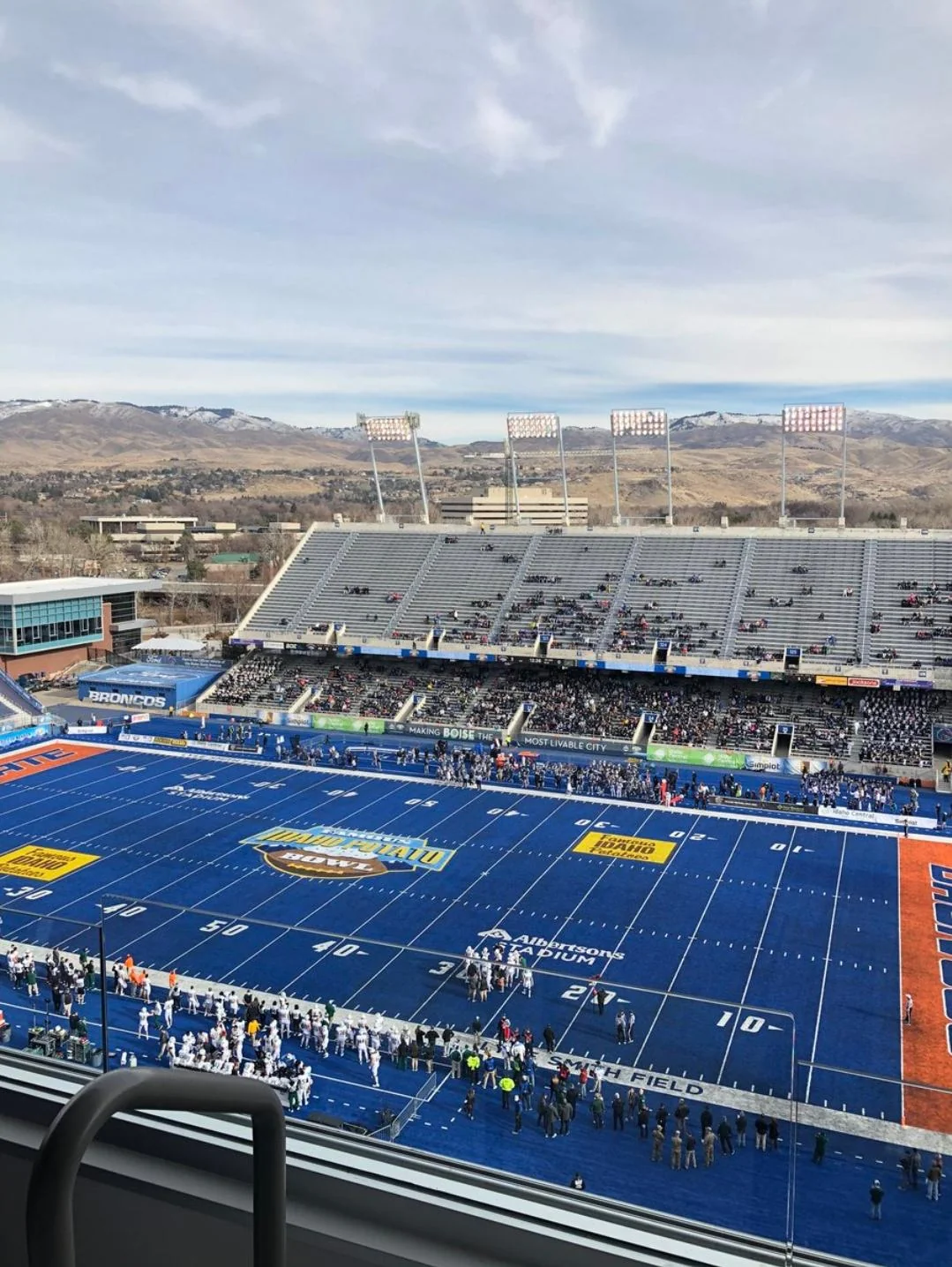
Meanwhile, we're supposed to get excited about Louisiana potentially playing Rutgers on a Wednesday afternoon in the middle of nowhere Idaho in the Good Lord, Who Sponsored This Thing Now Bowl.
Kickoff is at 2:30. The temperature is 17 degrees. Half the roster is already exploring the portal, and the television broadcast spends the third quarter discussing next year's SEC championship odds.
And we're supposed to treat that as the reward for a successful season?
I realize that's a ridiculous hypothetical, but you get my point.
Somewhere along the way, bowl games went from being celebrations of successful seasons to consolation prizes for teams that weren't good enough, or weren't connected enough, to make the actual playoff.
And here's the important part.
It didn't happen overnight.
It's been a gradual process. An expanded playoff here. Another meaningless bowl added there. A few more opt-outs. Another coaching change. Another television discussion about why these games supposedly don't matter.
Eventually, fans started believing it themselves.
Including me.
Now, I'm not suggesting there's some secret underground bunker at ESPN headquarters where executives are sitting around plotting the psychological manipulation of Louisiana football fans.
Although, considering some of the television commentary we've endured over the years, I wouldn't completely rule out the existence of a bunker.
What I am suggesting is that the gradual destruction of the traditional bowl system has created an absolutely perfect environment for the idea of a separate G6 playoff to flourish.
Think about the sales pitch.
Would you rather watch your 9-3 football team travel across the country to play a depleted Big Ten program in front of 11,000 people?
Or...
Would you rather see your team host a playoff game against another successful G6 program, with a chance to advance toward a championship?
That's not even a difficult question.
Of course fans would rather have the playoff.
Hell, I would.
And that's precisely what makes this so dangerous.
The conversation is no longer about whether we deserve equal access to compete for a national championship.
It's about whether we would enjoy our own separate postseason more than the increasingly irrelevant one we've been left with.
See how that works?
We've gone from demanding a seat at the table to debating whether the food might actually taste better at the kids' table.
And the most remarkable part is that nobody necessarily has to force us into accepting it.
We're beginning to talk ourselves into it.
Of course, none of this is happening in a vacuum.
For years, we've watched college football become increasingly divided between the programs that control the money and the programs that are expected to be grateful for whatever remains.
The terminology alone should tell you something.
Remember when we were all simply Division I-A football programs?
Then came the BCS conferences and non-BCS conferences.
Then the Power Five and Group of Five.
Now, with the rebuilt Pac-12 joining the collection of conferences outside the Power Four, we've officially entered the Group of Six era.
Yes, there's a practical reason for the new designation. But there's also something revealing about how naturally we've accepted these labels as part of the sport's hierarchy.
Every label reinforces the same message.
There are the important programs.
And then there are the rest of you.
Look at the College Football Playoff.
For the 2026 season, the four Power Four conference champions receive automatic bids. The highest-ranked team from the six other conferences receives one collective automatic bid, regardless of whether that team won its conference.
Six conferences competing for one guaranteed spot.
And while additional G6 programs technically remain eligible for at-large selections, let's not pretend their opportunities are remotely comparable.
What's particularly interesting is that Tulane and James Madison both earned playoff berths in 2025.
Instead of looking at that as proof that more opportunities should exist, the system continues to reinforce how little guaranteed access the G6 actually has.
Now the CFP is actively exploring expansion to 24 teams, potentially beginning in 2027. The reported framework would still reserve only one guaranteed spot for the G6.
Twenty-four teams.
Six conferences.
One guaranteed invitation.
As of November 6, the television agreement for potential expansion was still under review, so the proposed format isn't finalized. But the direction of the conversation is unmistakable.
And we're supposed to believe everyone is competing on the same level?
Please.
Here's where this gets even more interesting.
On October 29, On3's Brett McMurphy reported that 40 of 61 Group of Six head coaches surveyed favored a separate playoff, provided their programs maintained access to the College Football Playoff.
That's nearly two-thirds.
Two-thirds of the coaches leading programs that supposedly compete in the same subdivision as Alabama, Georgia, Ohio State, and Texas are entertaining the idea of playing for a different postseason championship.
Let that sink in.
And it's not difficult to understand why.
Those coaches see the financial realities. They understand the roster disparities. They know the challenges of recruiting and retaining players in the current environment.
More importantly, they see the benefits of having something meaningful to play for at the end of the season.
The bowl industry is even open to the idea. Bowl Season executive director Nick Carparelli said in December 2025 that bowl organizers would welcome the opportunity to help facilitate a separate G6 playoff if the conferences wanted one.
Think about the irony.
The very postseason system that's been losing its significance could eventually help organize the alternative that replaces it.
And suddenly, a separate playoff doesn't sound like surrender.
It sounds like innovation.
It sounds like opportunity.
It sounds like progress.
That's the part that concerns me most.
Because I'm starting to understand why so many people support it.
I can picture Cajun Field hosting a playoff game in December. I can imagine a packed stadium, an actual postseason atmosphere, and Louisiana playing meaningful football with something tangible on the line.
That sounds pretty damn awesome.
And that's exactly the problem.
Let me be clear about something.
I'm not arguing that the current bowl system is perfect. Far from it.
I've been one of the loudest people questioning whether a string of bowl appearances and victories should still be considered the standard for Louisiana football.
I've said repeatedly that we should be chasing conference championships instead of celebrating another December participation graphic.
But there's a difference between demanding more from your football program and accepting less for your football program.
That's the distinction we cannot afford to lose.
A separate G6 playoff could absolutely be entertaining.
It might produce better matchups, better television ratings, stronger fan engagement, and more meaningful games than the bowls we've grown tired of watching.
But none of those things changes what it represents.
A second championship.
A separate classification in everything but its official NCAA designation.
A permanent acknowledgment that certain programs are no longer expected to compete for the same prize as everyone else.
And here's another question worth asking.
What happens five years after the separate playoff begins?
What happens when it becomes successful enough that television executives decide the G6 doesn't really need its guaranteed CFP opportunity anymore?
After all, we have our own championship now.
Why should we take a spot away from the fifth-place SEC team?
You can already hear the argument being made.
That's why the condition attached to that coaching survey matters. The coaches want a separate playoff in addition to CFP access, not necessarily in place of it.
But history has taught us that what begins as an additional opportunity can eventually become the justification for further separation.
And once you voluntarily accept your place in a different competition, how much leverage do you really have to demand inclusion in the original one?
Here's what I keep coming back to.
Why are we allowing the deterioration of bowl games to determine what our future should look like?
Why is the answer to an increasingly meaningless postseason to create a separate postseason rather than demand meaningful access to the one that actually determines college football's national champion?
Why should Louisiana, Boise State, Memphis, Tulane, and dozens of other programs be expected to accept a different ceiling simply because they don't command the same television contracts?
And perhaps most importantly, why are we so quick to accept the argument that we don't belong?
I'm not naive.
I understand the differences in resources. I understand that a school like Louisiana isn't operating with the same financial advantages as Texas or Ohio State.
I also understand that college football has never been a perfectly level playing field.
But the entire appeal of sports is that the games are supposed to determine what happens.
Not media rights contracts.
Not conference affiliations.
And certainly not a committee deciding which programs are worthy of being invited to compete for the biggest prize.
If the G6 wants to organize a better postseason for teams that miss the CFP, I'm willing to listen.
But it should be an additional opportunity, not a white flag.
And the minute that separate playoff starts being marketed as our version of a national championship, we should all recognize what we're being asked to surrender.
I don't know whether the decline of bowl games and the growing push for a separate G6 playoff are connected by some deliberate, coordinated strategy.
I can't prove that, and I'm not going to pretend I can.
There are plenty of legitimate reasons bowl games have lost their appeal, and many of them are consequences of changes in college football that nobody fully anticipated.
But intentional or not, the result is becoming increasingly obvious.
The traditional postseason is losing its value.
The path to competing for the real national championship remains heavily tilted toward the power conferences.
And an increasing number of G6 coaches and fans are beginning to embrace the idea of having something entirely their own.
We're not just witnessing the separation of college football.
We're witnessing the normalization of that separation.
And that might be the most effective strategy of all.
Because the people making these decisions don't necessarily need to convince us that being relegated to a second tier is a good thing.
They just need to make our current situation frustrating enough that we start begging for an alternative.
And once we do?
They can present that alternative as something we've wanted all along.
I started thinking about this because I caught myself genuinely considering the merits of a separate playoff.
Me.
Someone who has spent years arguing that it would be the beginning of the end for programs like Louisiana competing at the highest level.
And for just a moment, I thought maybe it really would be better.
Then I asked myself how I reached that conclusion.
Turns out, the most disturbing part of this entire conversation isn't that college football's power brokers might eventually push us toward FCS 2.
It's that they're getting dangerously close to having us ask for it ourselves.
And if they can get someone like me to start thinking it sounds like a good idea?
Well, congratulations.
Apparently, it's working.
C'est Tout!
Get breaking news and curated stories delivered to your inbox every day. Be the first to know what’s happening around Louisiana athletics!


Lorem ipsum dolor sit amet, consectetur adipiscing elit. Suspendisse varius enim in eros elementum tristique. Duis cursus, mi quis viverra ornare, eros dolor interdum nulla, ut commodo diam libero vitae erat. Aenean faucibus nibh et justo cursus id rutrum lorem imperdiet. Nunc ut sem vitae risus tristique posuere. uis cursus, mi quis viverra ornare, eros dolor interdum nulla, ut commodo diam libero vitae erat. Aenean faucibus nibh et justo cursus id rutrum lorem imperdiet. Nunc ut sem vitae risus tristique posuere.
Delete